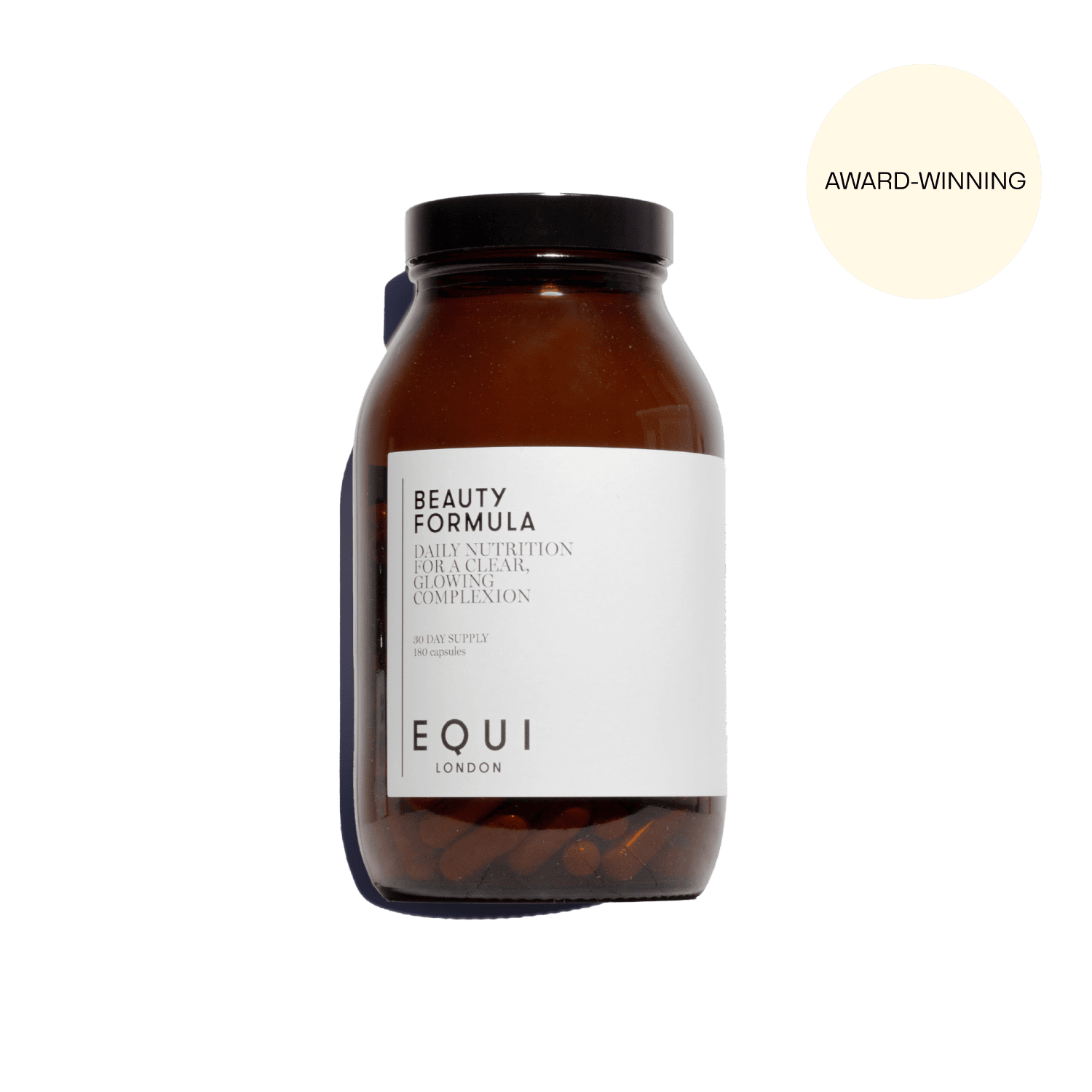


I worked in finance for almost a decade before I started Equi. The trading floors of Goldman Sachs and JP Morgan were brilliant and exciting but they didn't leave much room to pause. I'd always taken my health seriously, the gym, eating well, but when it came to supplements I bought whatever had a name I recognised from the press, a celebrity behind it, or the right kind of packaging. I assumed that visibility meant quality. It doesn't. And the industry knows most of us are making exactly that assumption.
It wasn't until I co-founded Equi and got inside the supply chain, the formulation labs, and the certification processes that I understood exactly why that approach was always going to let me down.
Here's what's actually happening.
WHAT IS FAIRY DUSTING IN SUPPLEMENTS?
The most profitable move in the supplement industry is to put an ingredient on a label at a dose that sounds impressive, knowing the consumer has no way to verify whether it's effective. The industry even has a term for it: fairy dusting.
The clinical evidence for most nutrients is dose specific, and formulating properly means understanding that research rather than just listing ingredients. Zinc is a good example. It plays a critical role in immune function, skin health, and hormone balance, and the evidence supports meaningful doses in an absorbable form. Many supplements contain token amounts of zinc oxide, a form with poor bioavailability, at doses well below what the research supports.
This is not about more being more. It's about formulating based on research, in informed, meaningful doses that are actually designed to make a difference. That is a very different thing from what most products on the market are doing.
The consumer pays for the name on the label. The manufacturer profits from the gap between the dose listed and the dose that actually works.
This is not unusual behaviour. It is standard practice in an industry where the barrier to launching a product is low, regulation is light, and the average customer doesn't read a certificate of analysis.
DOES THE FORM OF A SUPPLEMENT ACTUALLY MATTER?
Beyond dose, there's the question of form. This is where most products quietly fail the women taking them.
Not all versions of a nutrient are equivalent. Magnesium oxide is cheap to manufacture and poorly absorbed. A comparative study found its bioavailability to be significantly lower than organic forms including magnesium bisglycinate [Walker et al., Magnes Res, 2003]. Iron sulphate is the form used in most standard supplements and is what the NHS routinely recommends. It is also the poorest, most difficult to absorb form and the one most likely to cause the digestive issues women associate with iron supplementation. Iron bisglycinate is gentler and better tolerated. A clinical comparison showed it produced an equivalent haemoglobin response with fewer gastrointestinal side effects [Szarfarc et al., Arch Latinoam Nutr, 2001].
Folate and folic acid are not the same thing. A substantial proportion of the population carries a common variant in the MTHFR gene (C677T), with around 30 to 40% of people of European descent carrying one copy and around 10 to 15% carrying two copies. This variant can reduce MTHFR enzyme activity, influencing how efficiently folate is processed and used in the body. Emerging research suggests that using the bioactive form, L-5-methyltetrahydrofolate (5-MTHF), may support more consistent folate status across different genotypes, including those with reduced MTHFR activity [Lamers et al., 2006; Scaglione and Panzavolta, 2014; Obeid et al., 2013]. Despite this, folic acid remains the default form used in most supplements and fortified foods, largely because it costs less.
Gummies present another problem entirely. Stomach acid degrades many active ingredients before they can be absorbed properly. A gummy sitting in the stomach alongside sugar, citric acid, and gelatine is not an ideal environment for nutrient delivery. Probiotics are particularly vulnerable. Most cannot survive the acidic environment long enough to reach the gut where they are needed. The format that feels most appealing is often the one doing the least.
When Alice and I were formulating Equi, we made a decision early on that sounds obvious but is genuinely rare. We would use the highest quality forms with the best evidence for every single ingredient, regardless of cost.
WHY DO SUPPLEMENT BRANDS SPEND SO MUCH ON PACKAGING?
Take a walk down the supplement aisle in any pharmacy. The bottles are beautiful. The daily sachets you see with collagen powders and morning blends are expensive to produce, individually wrapped, and heavily marketed as a premium experience. None of that is free. All of it comes directly from the formulation budget.
This is the information asymmetry the industry runs on. You cannot taste underdosing. You cannot feel the difference between magnesium oxide and magnesium bisglycinate before you have paid. The sachet feels luxurious. The collagen inside it may be a fraction of the dose the evidence supports. By the time you have taken something for two months and concluded it probably isn't working, the brand has moved on to the next customer.
ARE SUPPLEMENTS INDEPENDENTLY TESTED IN THE UK?
Independent testing exists to verify that what's on the label is what's in the capsule, and that the product is free from contaminants. Brands and manufacturers are not required to do this at any point. Given that it is optional, expensive, and time consuming, a large proportion of the industry simply doesn't bother.
Equi's manufacturers are GMP and BRC accredited, and we go a step further by independently testing our products regularly. That means an external body verifies our formulations and checks for contaminants including toxic metals. Not because we're legally required to, but because we believe you have the right to know that what you're taking is what we say it is. This is not the industry norm.
WHAT IS POOR SUPPLEMENT QUALITY ACTUALLY COSTING WOMEN?
The financial cost is real. For most women taking supplements seriously, that's £40 to £100 a month on products that are not doing what they promise.
The cost that bothers me more is harder to quantify. It's the erosion of confidence in what's possible. Women who have been taking supplements for years with no noticeable results and have concluded that supplements just don't work. Women who stop trying to address hormonal skin, energy, or hair loss because the thing they tried didn't deliver. Not because the underlying nutrition science is wrong, but because the product was never formulated to actually work.
The industry profits from that confusion. A market where consumers don't expect results is a market that doesn't have to deliver them.
HOW TO CHOOSE A HIGH QUALITY WOMEN'S SUPPLEMENT
If you're evaluating a supplement, ours or anyone else's, these are the questions worth asking.
Has it been formulated by a scientist? A good formulation is not just a list of trending ingredients at the highest possible doses. It requires clinical expertise, an understanding of how nutrients interact, and the judgment to balance everything in a way that is both safe and effective. Alice has spent years doing exactly that in clinical practice, and Equi's formulas are recommended by the doctors and specialists she works alongside. That kind of external scrutiny is something most brands never face.
What forms are being used? Look for bisglycinate over oxide or sulphate for minerals. Look for methylfolate or methylated B vitamins rather than folic acid. Look for zinc picolinate over zinc citrate, and calcium ascorbate over ascorbic acid for vitamin C.
Is the product independently tested? This should be disclosed clearly. If it isn't mentioned, assume it isn't happening.
Do the people behind the brand actually use it? Alice formulated the products she takes every day and recommends in her clinic. I take them every day. That's not a marketing line. It's the most straightforward accountability measure there is.
The supplement industry runs on a single assumption: that most consumers won't look closely enough to know the difference. Equi was built on the opposite assumption. We'll keep making that case for as long as the industry makes it necessary.
Rosie Speight, Co-Founder, Equi London
REFERENCES:
Walker AF et al. Mg citrate found more bioavailable than other Mg preparations in a randomised, double blind study. Magnes Res. 2003;16(3):183-191.
Szarfarc SC et al. Relative effectiveness of iron bis glycinate chelate (Ferrochel) and ferrous sulfate in the control of iron deficiency in pregnant women. Arch Latinoam Nutr. 2001;51(1 Suppl 1):42-47.
Lamers Y et al. Red blood cell folate concentrations increase more after supplementation with [6S]-5-methyltetrahydrofolate than with folic acid in women of childbearing age. Am J Clin Nutr. 2006;84(1):156-61.
Scaglione F, Panzavolta G. Folate, folic acid and 5-methyltetrahydrofolate are not the same thing. Xenobiotica. 2014;44(5):480-8.
Obeid R, Holzgreve W, Pietrzik K. Is 5-methyltetrahydrofolate an alternative to folic acid for the prevention of neural tube defects? J Perinat Med. 2013;41(5):469-83.
Disclaimer: This article is for educational purposes only and does not constitute medical advice. Food supplements should not be used as a substitute for a varied, balanced diet or healthy lifestyle. Glow Edition is not suitable during pregnancy or breastfeeding. If under medical supervision, consult a healthcare professional before use.


