

10 min read
In this article:
Julia Yule — Bloom and Blossom
You built Bloom and Blossom with your sister-in-law, five kids between you, a family relationship and a business running in parallel. What does building with family actually feel like from the inside?
Like the very best and the hardest thing at the same time. As a founder you cannot switch off from your business and in turn each other. There is no "work mode" and "family mode" — it is all just one big, overlapping, beautiful reality. A family birthday becomes a debrief. A school run text turns into a product decision. The boundaries do blur, but we know how to manage this as we have been doing this a long time.
And it works for us because Christina and I are accountable to each other and importantly because we are different. We balance each other out. Trust is imperative and we have that in bucket loads for each other, which is the thing that actually carries you through the harder moments and running a business is hard, whilst also utterly rewarding.
Throw in five kids between us, and we have built this brand while living the life stages we design for. We know what she needs because we are her.
There are so many body care brands out there. What did you see missing when you started, and do you think that gap still exists?
We saw brands that were either purely functional and a bit clinical, or not really speaking to the women. What was missing was something that genuinely worked, was formulated with real care, with problem solving at the forefront of development, packed with actives you would only naturally see in skincare and also felt like it understood you. Not just your skin, but the stage of life you were actually in.
Nobody was talking directly to women going through pregnancy, postpartum recovery, or perimenopause in a way that felt human. It was either medicalised or ignored. We wanted to build the brand that felt like a friend who actually got it as the gap still exists.
You launched with maternity and the brand has followed you and Christina through your own life stages into menopause. What surprised you most about that journey, personally?
That it never felt like a strategy. The brand following us through our own life stages was not something we planned in a boardroom. It just happened because we were honest about where we were. When the conversation needed to shift, we shifted. When we needed something ourselves, we built it.
What surprised me most is how much that resonates. Women can tell when something comes from a genuine place. They have very good radar for the difference between a brand that has researched a life stage and a brand that has lived it. We have always been the latter and I think that trust is the thing we are most proud of.
Women are drowning in product advice. What's the one thing you'd want them to actually understand about body care ingredients — the thing that would change how they shop?
Concentration matters more than the ingredient itself. You can have the most impressive-sounding active in a product, but if it is at a vanishingly small percentage, it is not doing much beyond the marketing claim. What changed the way we formulate was asking: what does the skin actually need, at what level, to see a real difference? That is what "skinification of body care" means to us. Not just borrowing facial skincare language, but genuinely applying facial skincare standards to the body.
We tell people exactly what is in our products and what it does. Not because it is good marketing, but because if you know how something works, you trust it. And trust is the only thing that actually keeps a product in your routine.
On an ordinary Tuesday, what does self-care actually look like for you? The real version.
Not a bath surrounded by candles, I can tell you that much…
Real self-care for me is the ten minutes I carve out in the morning before the house wakes up. I do not always manage it, maybe on a Saturday morning before the weekend ensues, but when I do it sets the whole day differently. I use that time for a proper body care routine, not because I am precious about it, but because it is the one moment that is genuinely mine. I have a slightly ridiculous number of our own products in my bathroom, some in testing stage, some just my ride or die products.
And beyond that it is sleep, jumping in bed early at least one night of the week really helps. Regular runs, always first thing in the morning, set me up for the day ahead — clears my mind and gives me the boost I need. And family dinners — I love to cook and the highlight of my day is when we all get to eat together and share the daily updates. All of it counts.
Rosie Speight — Equi London
You came off the pill to try for a baby and your skin fell apart within a week. That's a very personal place to start a business.
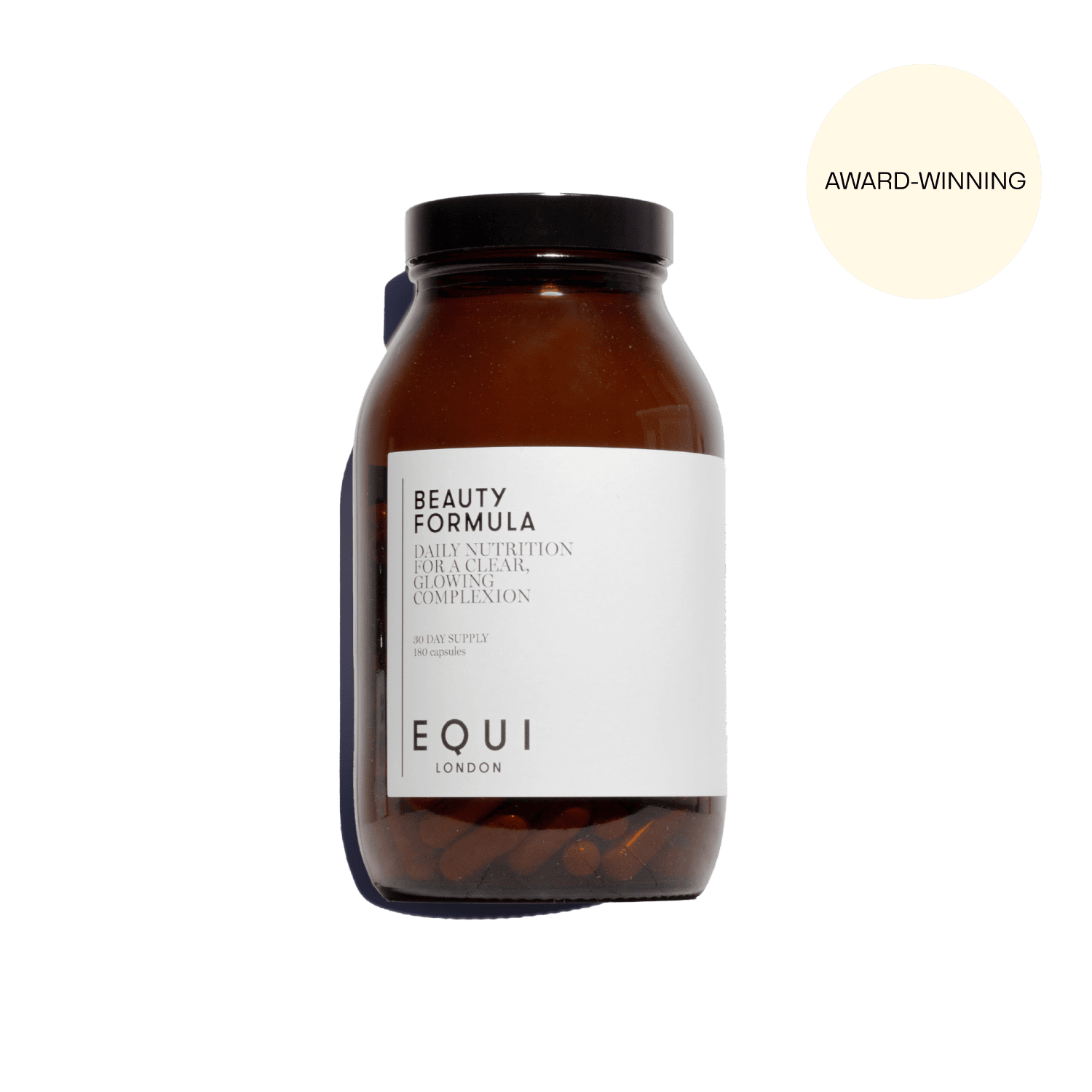
I'd been on the pill since I was sixteen. My doctor prescribed it for my skin and it worked, but I was a slave to it — every time I tried to come off, my skin erupted, and the answer was always to go back on. When my husband and I decided to try for a baby, there was no going back on it, and within a week my skin fell apart. At the time I was working in active sales in investment banking, out pitching constantly, and when you've got spots it really knocks your confidence — I'm sure it knocked my performance too. Constantly touching up my makeup, waking up every morning not knowing if there'd be another breakout. It's horrible, and for anyone suffering with a skin issue — breakouts, rosacea, acne, eczema — I have the utmost sympathy. It's not trivial. It affects your confidence and how you show up in the world. My closest friend Alice, a clinical nutritionist, had seen my exact pattern in her clinic hundreds of times. She put me on a regimen of practitioner-grade supplements that transformed my skin — and cost me £400 a month. I would have done anything to stop my breakouts, so when we found something that genuinely helped, it became a mission to bring it to more women. That's Equi.
What did you bring from banking that actually made Equi London better?
Confidence, mostly — and a deep financial understanding. I'd studied economics and finance for years, so I went into the business trusting the financial decisions I was making, and I think that's ultimately the most important thing. There's a right and wrong way of doing finance, but growing a business? There's no blueprint. It's different for everyone, so learning to back yourself is everything. The corporate background was invaluable too — understanding how teams work, hierarchy, organisational structure, how operations actually run. And in my last years in the City I was working in a micro start-up within the bank, so I had visibility on how something gets built — not quite from the ground up, because it sat inside a huge organisation, but close enough that when it came to building Equi, it didn't feel like a foreign world.
What's the gap between a friend's recommendation and what a nutritionist would actually put them on?
The wellness industry has changed dramatically since we started over ten years ago, but even then it was a hot topic — and unfortunately, when an industry grows like this, all sorts of players pile in because it's where money is being spent. Regulation is pretty loose. Anyone can get some random scientist to formulate something without any credibility, or buy white-label products off the shelf. The reality is most of the market is built on exciting marketing — beautiful branding, influencers, celebrity. So when a friend recommends a product, even with the best intentions in the world, a lot of the time that recommendation is based on sexy marketing. Whereas if you actually went to a nutritionist, what they'd give you would look a lot more boring — unbranded pots, no marketing behind them — but what's inside is clinical. Equi bridges that gap. We're used by doctors, trusted by nutritionists, stocked on specialist practitioner websites and used in clinics — particularly for our Pregnancy and Menopause products — but we're also in Harrods and Boots. That span is genuinely unique. We've always seen Equi as a trusted friend to our customers: expert recommendations from a friendly position, never authoritative, just wanting to help.
How has becoming a mother changed what you put in your own body?
Funnily enough, we actually started Equi when I was pregnant with my first daughter — I gave birth four weeks before we launched. It was a crazy, crazy time. We began with Beauty Formula, our skin product, but with pregnancy supplements front of mind, we quickly developed Pregnancy Formula — because I couldn't find a high-quality prenatal anywhere, and we were absolutely horrified by the quality of what women were being given, including the best-selling products on the high street. We knew we could do better and we knew women deserved better. Pregnancy Formula is now used in IVF and fertility clinics up and down the country — fertility doctors call it the most comprehensive, highest-quality prenatal on the market. As for what I put in my own body, honestly not much has changed. I've always believed balance is the key — nothing in extremes. But high-quality supplements are an easy win, and they shouldn't be confusing or overwhelming. That's exactly why Equi exists: to help women navigate wellness and have one easy, high-quality thing in their lives every day, without the stress of figuring it all out. We've done it for you.
Where does the honest conversation about hormonal health go next, and what's Equi's role in it?
I'm still astounded that teenagers are put on the pill as standard. I find it outrageous that hormone replacement is so quickly given to young women while they're still maturing — their hormones haven't been given the opportunity to settle — when there are so many alternative ways to treat natural imbalances, and we're seeing that come through in the science of nutrition now. What I'd like to see more of is research specifically on women. Most medical research is done on men, because women's hormonal cycles make consistent trials more expensive to run — but that's exactly why we need it. So I think that's where the conversation goes next: away from defaulting to hormonal intervention, towards properly understanding women's bodies and supporting them through every stage. That's the space Equi has been in for over a decade — Alice has spent her whole career treating women through these transitions in clinic, and we've built a product for every stage, from skin to pregnancy to menopause.
Discover the full Equi London range HERE.
This article is for informational purposes only and is not intended as medical advice. Please consult a healthcare professional before making changes to your diet, lifestyle, or supplement routine.


