

6 minute read
In this article:
- Why people have been disappointed by collagen in the past
- What the evidence actually shows — including the new 2026 umbrella review
- A note on funding and research quality
- The role of diet and lifestyle
- What makes collagen work (and what doesn't)
- Why Peptan® matters - and a note on marine collagen
- What else collagen needs to do its job
- Keratin - the overlooked partner
- The bottom line
Still not sure if collagen works?
This review of 8000 patients might change your mind.
Very recently, a well-known UK wellness influencer took to Instagram to share her belief that collagen supplements do indeed work. The post went viral, sparked considerable debate, and has since been removed. What it revealed is that collagen has become a rather contentious subject lately - and for most women trying to make an informed decision, a very confusing one! Nobody wants to waste money on a supplement that does not deliver, but I think we can all agree that collagen has always been intuitively compelling. Bone broth has been used as a healing food across cultures throughout history. Collagen is the most abundant structural protein in the human body. The question of whether supplementing with it makes a difference is a reasonable one, and it deserves a proper answer.
Here is what the science actually shows.
Why people have been disappointed by collagen in the past
Most collagen powders and capsules on the market share a few common problems. The source is often poor quality, the dose is insufficient (many products contain 1–2g when the clinical literature typically demonstrates effects at 5–10g) and the form is not hydrolysed into the small bioactive peptides that can actually be absorbed across the gut wall. Also the co-factors needed for collagen synthesis (vitamin C in particular) are often absent or present at doses too low to matter.
There is also a timing expectation problem. Many women try collagen for four to six weeks, see no dramatic change, and stop. The evidence suggests meaningful changes in skin hydration and elasticity typically require eight to twelve weeks of consistent supplementation, and that ongoing use produces cumulative benefit. Collagen is not a short-term intervention. It is a long-term nutritional strategy.
What the evidence actually shows — including the new 2026 umbrella review
The most comprehensive data on collagen now available is a 2026 umbrella review published in the Aesthetic Surgery Journal Open Forum, which examined 16 systematic reviews covering 113 randomised controlled trials and 7,983 patients.1 This is the highest level of evidence in nutritional science – essentially a review of reviews - and the findings are worth knowing.
The review found consistent and clinically meaningful evidence for hydrolysed collagen supplements in three areas: dermal outcomes (skin hydration, elasticity, density, and reduction in wrinkle depth), musculoskeletal health (muscles, tendons, joints), and osteoarthritis symptoms. The results were most robust for skin, where the evidence base is largest and most consistent.
For skin specifically, multiple individual RCTs add to this picture. A double-blind placebo-controlled trial in 112 women supplementing with 10g of hydrolysed collagen peptides daily for eight weeks found significant improvements in skin elasticity, hydration, and roughness compared to placebo.2 A 2025 randomised double-blind placebo-controlled trial examining bioactive collagen peptides with a molecular weight distribution concentrated below 2,000 daltons (what we use at Equi) found significant improvements in dermal density, hydration, and elasticity over twelve weeks - with benefits sustained even 4 weeks after discontinuation of the supplement, suggesting that the effects on dermal tissue quality are more durable than a short supplementation window might imply.3
It is worth noting that most collagen trials recruit women aged 40–60, where collagen loss is most measurable and the baseline deficit being addressed is greatest. Younger women may see less dramatic change on outcome measures - not because the biology is different, but because the room for measurable improvement is smaller when starting from a higher baseline. This does not mean supplementation is without value earlier in life, particularly as a preventative strategy, but it is a reasonable expectation to set.
It's important to acknowledge that (like most scientific research) the evidence is not perfect and there are legitimate limitations. The 2026 umbrella review noted mixed results in areas such as sports performance and some cardiometabolic markers, where the evidence base is thinner. And experts including the President of the British Association of Dermatologists have noted that key variables (UV exposure, smoking, sleep, hormonal status) are not consistently controlled across the included studies.
A note on funding and research quality
One of the most common criticisms of collagen research is that many individual trials are funded by the manufacturers of collagen ingredients - and this is broadly true. It is a bias risk that should be acknowledged, but let us explain this a bit more.
What makes the 2026 Ravindran et al. review particularly significant is that the umbrella review itself received no funding from the supplement industry - it was an independent academic analysis conducted by researchers at Anglia Ruskin University. This does not eliminate the risk that the underlying trials it analysed were influenced by industry funding, but it removes one layer of conflict from the highest-level piece of evidence.
It is also worth understanding why industry funding dominates this field. Government research bodies and independent funders typically prioritise pharmaceutical interventions over nutritional supplements. Collagen is not patentable, which means there is limited commercial incentive for large pharmaceutical companies to fund rigorous independent trials, and limited appetite from public health funders to do so either. The result is that the supplement evidence base is disproportionately reliant on industry-funded research across almost every ingredient category, not just collagen.
It is also worth being transparent about a 2025 meta-analysis published in the American Journal of Medicine, which analysed 23 RCTs and found that when studies were stratified by funding source, those not funded by industry showed fewer significant effects of collagen on skin hydration, elasticity, or wrinkles, while industry-funded studies consistently did.6 This doesn't mean collagen doesn't work however, and it's important to note again that industry-funded trials are often testing their own well-formulated, adequately dosed products, which maybe why they see stronger seeing results.
The role of diet and lifestyle
Before discussing specific ingredients, remember that diet forms the foundation for collagen production because synthesis of it requires protein - specifically the amino acids glycine, proline, and hydroxyproline, which come from a diet that includes adequate protein from animal or plant sources. It requires vitamin C, zinc, copper, and silicon from a varied whole food diet. Micronutrient deficiencies in any of these areas will limit what collagen supplementation can achieve, because the raw building blocks and enzymatic co-factors will not be in place.
Equally important is what breaks collagen down - and the list is long. Sugar and refined carbohydrates drive a process called glycation, in which sugar molecules bind to collagen fibres and stiffen them, accelerating the visible signs of skin ageing. Alcohol impairs liver function and depletes the B vitamins, vitamin C, and zinc that collagen synthesis depends on. Smoking is one of the most powerful accelerators of collagen breakdown, reducing skin blood flow and generating the free radical damage that destroys collagen fibres faster than they can be replaced. Chronic UV exposure degrades collagen directly through the same oxidative stress pathways. Environmental pollution adds a further oxidative burden on top of all of this.
None of these are fully compensated for by supplementation and our honest position has always been that supplementation works best when it is supported by a diet and lifestyle that nourishes the skin - not compensating for one that is undermining it. The two together produce better outcomes than either alone.
What makes collagen work (and what doesn't)
Three factors determine whether collagen supplementation is likely to make a meaningful difference.
The form. Collagen must be hydrolysed i.e. broken down into small bioactive peptides, to be absorbed across the gut wall. Intact collagen protein cannot be absorbed in a form that reaches the dermis. Molecular weight matters here. Peptides in the range of 2,000 to 3,500 daltons show superior absorption and effectiveness compared to those with higher molecular weights.4 Peptan®, the collagen we use in Collagen & Keratin Edition, is produced at approximately 2,000 daltons - sitting at the optimal end of this range. A randomised double-blind crossover study confirmed that hydrolysed collagen sources yield relevant plasma concentrations of the key collagen metabolites - including the dipeptides Pro-Hyp and Hyp-Gly that stimulate fibroblast activity in the skin.5 Once absorbed, these peptides act as biological signals, stimulating the skin's own fibroblasts to produce new collagen - an indirect but well-evidenced mechanism.
The dose. Studies demonstrating meaningful skin outcomes typically use 5–10g of hydrolysed collagen peptides daily. There is some evidence that lower doses can produce modest benefit - the dose-response relationship is not entirely linear - but the most consistent and robust results sit at the higher end of this range. So if you've been taking a product that has 1 or 2 capsules and claims to be a collagen support, its extremely unlikely you've been getting much more than around 800mg collagen.
Consistency. Skin remodelling is a slow process. Studies showing significant results run for a minimum of eight weeks and typically twelve. A 2025 trial found that improvements in dermal density and elasticity were still measurable four weeks after supplementation stopped, suggesting that consistent use over time produces changes that outlast the supplementation period itself.3 This is a supplement that rewards patience and consistency.
Why Peptan® matters - and a note on marine collagen
Not all hydrolysed collagen is equivalent. The source, the hydrolysis process, and the resulting peptide profile all influence bioavailability and tissue uptake.
Peptan® is a specific type 1 hydrolysed fish collagen produced by Rousselot through an optimised hydrolysis process, with its own clinical research portfolio. A study in 85 women aged 40–65 found that 5g of Peptan® daily for twelve weeks produced significant improvements in skin density, hydration, and elasticity, alongside a visible reduction in wrinkle depth.7 A second study in 60 women aged 45–60 found improvements in overall skin appearance and hair strength across an ethnically diverse population. This is why we chose this form of type 1 collagen for our Collagen & Keratin Edition.
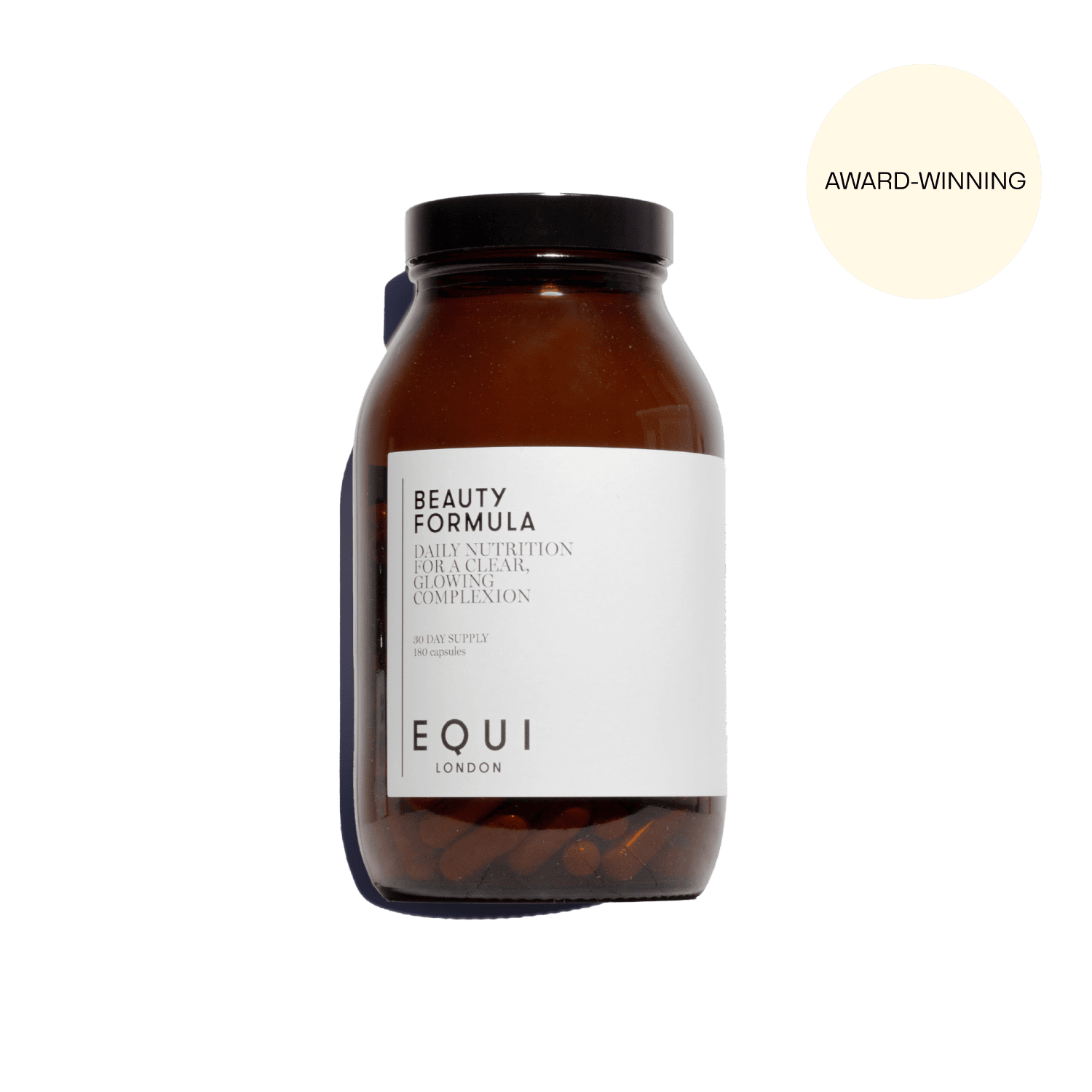
Our Beauty Formula uses Collyss, a fish-derived type 1 hydrolysed marine collagen. Marine collagen has a growing evidence base of its own. A 2023 meta-analysis of 26 randomised controlled trials involving 1,721 participants found that hydrolysed collagen supplementation significantly improved skin hydration and elasticity compared to placebo, with fish-sourced collagen showing particularly strong results for hydration.8 A randomised triple-blind placebo-controlled trial in women aged 45–60 found that twelve weeks of fish-derived hydrolysed collagen produced a significant 35% reduction in wrinkle score and a 24% greater reduction in wrinkles compared to placebo.9 Marine collagen also tends toward the lower end of the molecular weight spectrum, which may support absorption.
What else collagen needs to do its job
Collagen supplementation provides the raw peptide material the body uses to synthesise new collagen. But the synthesis process itself requires specific nutritional co-factors, and without them, the raw material cannot be effectively utilised. This is one of the reasons why many products on the market do not go deep enough.
Vitamin C is the most critical co-factor. It is essential for prolyl hydroxylase, the enzyme that stabilises the collagen triple helix structure. Without adequate vitamin C, collagen fibres are structurally compromised and break down more readily. Collagen & Keratin Edition includes vitamin C at 100mg per serving. Beauty Formula provides 250mg per daily dose alongside acerola cherry for additional natural vitamin C activity.
Zinc plays a role in collagen cross-linking and matrix metalloproteinase regulation - the enzymes that control the rate of collagen breakdown. It is included in both formulas as zinc picolinate, a highly bioavailable form.
Glutathione is the body's master antioxidant and is included in Collagen & Keratin Edition for a specific reason. In the dermis, glutathione supports fibroblast viability and function, promoting collagen synthesis and extracellular matrix remodelling - essential for structural resilience. It also protects collagen from oxidative damage through its influence on redox-sensitive signalling pathways including Nrf2 and TGF-β.10 In plain terms, glutathione both supports new collagen production and protects existing collagen from the oxidative stress that breaks it down, making it a meaningful addition alongside collagen peptides rather than a peripheral ingredient.
Silica from bamboo extract (in Beauty Formula) supports connective tissue integrity and contributes to the structural framework within which collagen fibres are organised.
Hyaluronic acid - in the Glow Edition works alongside collagen in the extracellular matrix, maintaining skin hydration and the cushioning environment in which collagen fibres function. The two are synergistic - collagen supplements taken alongside hyaluronic acid consistently show stronger outcomes than collagen alone which is why our Glow Edition pairs so well with Beauty Formula or Collagen & Keratin Edition.
Resveratrol and pine bark extract – These are in both the Rewind Edition and Beauty Formula and provide antioxidant protection against the oxidative stress that breaks down collagen, particularly relevant given that UV exposure, pollution, and environmental stress are responsible for a significant proportion of visible collagen loss.
Alpha-lipoic acid and CoQ10 in Beauty Formula adds further antioxidant and mitochondrial support, protecting the cellular environment in which collagen synthesis takes place and slowing the oxidative ageing of skin at a cellular level.
Keratin - the overlooked partner
Collagen and keratin are both structural proteins, but they serve different roles. Collagen provides the scaffolding beneath the skin - the framework that determines firmness and elasticity. Keratin is the primary protein of the hair shaft and the outer layers of the skin, where it determines strength, resilience, and surface texture.
Many women experience changes in both simultaneously - skin losing density while hair becomes thinner, more brittle, or slower growing - because the underlying nutritional and hormonal drivers often affect both protein types at once.
Cynatine HNS, the form of keratin included in Collagen & Keratin Edition, is a solubilised keratin specifically developed for oral bioavailability. A 90-day double-blind placebo-controlled trial found that Cynatine HNS supplementation significantly improved hair strength, brightness, and texture compared to placebo.11 It is one of the few keratin ingredients with a real clinical evidence base, as opposed to simply a theoretical rationale for inclusion.
The bottom line
Research is showing that high quality collagen supplementation has a real biological effect - it is absorbed, it reaches the dermis, and it stimulates the skin's own collagen-producing cells. When the form is right, the dose is adequate, and the co-factors are in place, the evidence base for skin outcomes is now robust enough that dismissing it as trend-driven is no longer scientifically accurate.
But the majority of products on the market do not meet the criteria that the evidence supports. What the research describes is a specific intervention: hydrolysed collagen peptides at a meaningful dose, in a form with clinical evidence, at a molecular weight that supports absorption, taken consistently over months rather than weeks, alongside vitamin C and the other co-factors that support the synthesis pathway.
That is what we have built into both Collagen & Keratin Edition and Beauty Formula - not collagen as a marketing ingredient, but collagen as a clinical one.
Shop at equilondon.com or take the quiz to find the right product for you: HERE
This article is for educational purposes only and does not constitute medical advice. Food supplements should not be used as a substitute for a varied, balanced diet or healthy lifestyle. If you are pregnant, breastfeeding, or under medical supervision, please consult your GP before use.
References
- Ravindran R, Pizzol D, López-Gil JF, Rahmati M, Boyer L, Fond G, et al. Collagen supplementation for skin and musculoskeletal health: an umbrella review of meta-analyses on elasticity, hydration, and structural outcomes. Aesthet Surg J Open Forum. 2026;8:ojag018.
- Yee KM, et al. The efficacy and safety of CollaSel Pro® hydrolyzed collagen peptide supplementation in improving skin health in adult females: a double-blind, randomized, placebo-controlled clinical study. Nutrients. 2024;16(17):2948.
- Wang Y, et al. The sustained effects of bioactive collagen peptides on skin health: a randomized, double-blind, placebo-controlled clinical study. J Cosmet Dermatol. 2025. doi:10.1111/jocd.70565.
- Seong JK, et al. Low-molecular-weight collagen peptide supplement promotes healthy skin. J Cosmet Dermatol. 2024 - this directly addresses molecular weight and skin outcomes.
- Koizumi S, Inoue N, Shimizu M, et al. Absorption of bioactive peptides following collagen hydrolysate intake: a randomized, double-blind crossover study in healthy individuals. Nutrients. 2024;16(16):2660. PMC11325589.
- Myung SK, Park Y. Effects of collagen supplements on skin aging: a systematic review and meta-analysis of randomized controlled trials. Am J Med. 2025;138(7):1264–1277.
- Asserin, J., et al. The effect of oral collagen peptide supplementation on skin moisture and the dermal collagen network: evidence from an ex vivo model and randomized, placebo-controlled clinical trials. Journal of Cosmetic Dermatology. 2015.
- Pu SY, Huang YL, Pu CM, et al. Effects of oral collagen for skin anti-aging: a systematic review and meta-analysis. Nutrients. 2023;15(9):2080.
- Evans M, Lewis ED, Zakaria N, Pelipyagina T, Guthrie N. A randomized, triple-blind, placebo-controlled, parallel study to evaluate the efficacy of a freshwater marine collagen on skin wrinkles and elasticity. J Cosmet Dermatol. 2021;20(3):825–834.
- Espinosa-Diez C, Miguel V, Mennerich D, et al. Glutathione in skin aging and tissue regeneration: a systematic review of molecular mechanisms, redox modulation, and biomedical implications. Molecules. 2026;31(6):981. doi:10.3390/molecules31060981.
- Beer C, Wood S, Veghte RH. (2013). A randomized, double-blind, placebo-controlled clinical trial to investigate the effect of Cynatine(®) HNS on skin characteristics. Int J Cosmet Sci, 35(6), pp. 608-12.


