

WHY YOUR SKIN IS A BAROMETER FOR WHAT'S HAPPENING INSIDE YOUR BODY
When a patient comes to my clinic with persistent skin concerns, the conversation rarely stays on the surface for long. Skin gives real insights into internal health, and the gut skin connection in particular is becoming one of the most well-researched relationships in nutritional medicine. Our skin can reflect what is happening in the gut, the hormonal system, and the inflammatory cascade simultaneously - and understanding that changes everything about how we approach skin health.
It is why we at Equi champion nutrition as a cornerstone of skin health. Because the science shows we have so much more than topical support at our disposal. Here is what the evidence tells us.
IS THERE REALLY A CONNECTION BETWEEN GUT HEALTH AND SKIN?
The gut skin connection is one of the most thoroughly researched areas in nutritional dermatology. A 2018 systematic review found consistent associations between gut microbiome dysbiosis and inflammatory skin conditions including acne, eczema, psoriasis, and rosacea.¹ The mechanism is well established: when the gut microbiome is disrupted, intestinal permeability increases, allowing bacterial endotoxins to enter systemic circulation. This triggers a low-grade inflammatory response that can express itself in the skin, particularly in those who are more predisposed to it.
In practical terms, this means topical treatments can only go so far if one of the root causes links back to the gut. They may soothe and calm at the surface, but they are fighting a battle they cannot win until the source is addressed.
The role of specific probiotic strains in improving skin condition has been demonstrated in human trials. A randomised controlled trial (RCT) in 56 adults with acne found that daily supplementation with Lactobacillus acidophilus and Bifidobacterium bifidum for 12 weeks significantly reduced acne lesion counts compared to placebo.² Another RCT found oral probiotics reduced skin sensitivity and improved barrier function in women with sensitive skin.³
Alongside probiotics, glutamine plays an important supporting role in gut barrier integrity – something many loosely refer to as 'leaky gut'. As the primary fuel source for intestinal epithelial cells, glutamine is essential for maintaining tight junction proteins - the structures that determine how permeable the gut lining is.⁴ A randomised, double-blind, placebo-controlled trial in 106 adults with post-infectious IBS and 'leaky gut' found that oral glutamine supplementation (5g three times daily for 8 weeks) normalised intestinal permeability in the treatment group but not in the placebo group, alongside significant improvements in symptom scores.⁵ A 2024 systematic review and meta-analysis of randomised controlled trials further supported the potential of glutamine to reduce intestinal permeability.⁶ The clinical significance of the gut-skin axis means that supporting the gut lining is likely to have downstream benefits for skin that topical products simply cannot replicate.
Other gut-supporting ingredients worth noting in the context of skin health include turmeric, which has been shown to reduce the inflammatory and oxidative stress pathways linked to tight junction disruption (leaky gut),⁷ alongside digestive enzymes such as bromelain and papain, which support the breakdown of proteins and may help to reduce the potential for partially digested food particles to provoke an immune response in the gut.
HOW DO HORMONES AFFECT SKIN HEALTH?
Oestrogen, progesterone, testosterone, and cortisol all have direct effects on skin behaviour. Oestrogen stimulates collagen production and maintains skin hydration by supporting hyaluronic acid synthesis. As oestrogen declines (whether cyclically in the luteal phase, after coming off the contraceptive pill, or during perimenopause) many women notice their skin becomes drier, more reactive, or more prone to breakouts.
Androgens are the primary driver of sebum production. When androgen activity is elevated relative to oestrogen (which can occur with PCOS, during the premenstrual phase, or when cortisol is chronically elevated) the sebaceous glands produce more oil, increasing the likelihood of pore blockage and inflammation. A 2024 review confirmed that androgen-mediated increases in sebum production often occurs with acne, acting through androgen receptors in sebaceous gland tissue.8 A study of 207 women with adult acne found that 72% showed hormonal abnormalities including elevated androgens, insulin resistance, or PCOS type symptoms.⁴
This explains why so many women notice skin changes that track precisely with their cycle: breakouts in the week before menstruation, clearer skin in the follicular phase, reactive skin when stress is high. I reassure many of my clients that their skin is not behaving randomly. It is responding to hormonal signals with considerable accuracy.
Zinc is one of the nutrients we as nutritionists rely on most in this context. Beyond its well-documented anti-inflammatory and antimicrobial properties, zinc has anti-androgenic activity – it helps to inhibit 5α-reductase, the enzyme responsible for converting testosterone into the more potent dihydrotestosterone (DHT).9 A systematic review and meta-analysis of RCTs found that oral zinc supplementation reduced the number of inflammatory acne spots, with evidence supporting its use as part of an approach to managing hormonal acne.10 This is one of the key reasons zinc picolinate (a highly bioavailable form) features prominently in our Beauty Formula.
Reishi mushroom (Ganoderma lucidum) is another ingredient with a role in androgen balance. Laboratory studies have shown that reishi extract inhibits 5α-reductase activity — notably showing the strongest inhibitory activity among 19 edible and medicinal mushrooms tested11 — which may help moderate the conversion of testosterone to DHT at tissue level. It is worth noting that this research is largely preclinical, and robust human trials on reishi specifically for hormonal acne are limited. However, the mechanism is well established and the ingredient has a long history of use in this context, as well as for immunity and gut health.
WHAT ROLE DOES THE LIVER PLAY?
The liver is responsible for metabolising and clearing excess hormones, including oestrogen – it's not just things we put into our bodies, or are exposed to. When liver function is suboptimal - whether through nutritional deficiency, a sluggish gut, elevated toxic load from alcohol or environmental exposure, or even thyroid issues - hormone clearance can be impacted. Elevated circulating oestrogen can disrupt hormonal balance and contribute to the skin reactivity many women experience as cyclic or perimenopausal skin changes.
Nutrients that support the liver's detoxification pathways include B vitamins in their active 'methylated' forms - particularly folate (as 5-methyltetrahydrofolate), B6 (as pyridoxal-5'-phosphate), and B12 (as methylcobalamin) - which are essential for phase II methylation. Glutathione is the liver's primary antioxidant and detoxification molecule, and its precursors including vitamin C are foundational to this process. Turmeric (added as high-potency curcuminoids in Beauty Formula) supports both liver enzyme activity and the reduction of hepatic inflammation.
Spirulina also deserves mention here - it contains phycocyanin, polysaccharides, and cysteine (the latter is a precursor to glutathione) and a 2025 review concluded that spirulina demonstrates liver-protective properties through its capacity to reduce oxidative stress, also showing reduced liver enzymes — blood markers associated with liver stress.12 Spirulina is not just a superfood — emerging research suggests it may offer useful support to the liver's natural detoxification processes, helping to manage oxidative burden.
WHAT IS DRIVING SKIN INFLAMMATION?
Across every pathway, be that gut dysbiosis, intestinal permeability, hormonal imbalance, or impaired liver clearance, the mechanism that ultimately produces visible skin changes is inflammation. For many women, this manifests as redness, breakouts, sensitivity, rosacea flares, and even accelerated collagen breakdown.
The nutrients most consistently shown to modulate skin inflammation in human studies include omega-3 fatty acids, zinc, vitamin C, and turmeric. A randomised controlled trial in 45 participants with acne found omega-3 supplementation over 10 weeks significantly reduced inflammatory lesions.13 Zinc picolinate at 30mg daily has been shown to reduce inflammatory acne lesion counts comparably to low-dose antibiotics in a head-to-head trial of 66 patients.¹⁴ Bilberry, rich in anthocyanins, has demonstrated antioxidant and anti-inflammatory activity in human studies, and alongside pine bark extract (another anthocyanin-rich ingredient in Beauty Formula) may help protect against the oxidative stress that accelerates skin ageing and worsens inflammatory skin conditions.
Alpha-lipoic acid, CoQ10, and resveratrol round out the antioxidant support within the formula, each targeting the free radical activity and mitochondrial stress that underpins both systemic inflammation and skin ageing at a cellular level.
If your skin is consistently reacting, the question to ask is not simply which serum or treatment to add next. The question is which internal system is most likely to be driving the reaction.
Is it hormonal - tracking with your cycle or a recent hormonal change? Is it inflammatory - worsening with stress, poor sleep, or a recent illness? Is it gut-related - correlating with digestive symptoms or antibiotic use? Is it nutritional - linked to a demanding life stage such as pregnancy, postpartum, or perimenopause?
The answers to those questions may help to determine how nutrition can help as part of a protocol to address it. If that intervention helps to address the root cause rather than the symptom, it tends to produce results that topical treatment alone never quite manages.
The skin is often telling you something. It is usually worth listening.
Alice Mackintosh, BSc (Hons), mBANT, CNHC — Co-Founder and Registered Nutritional Therapist, Equi London
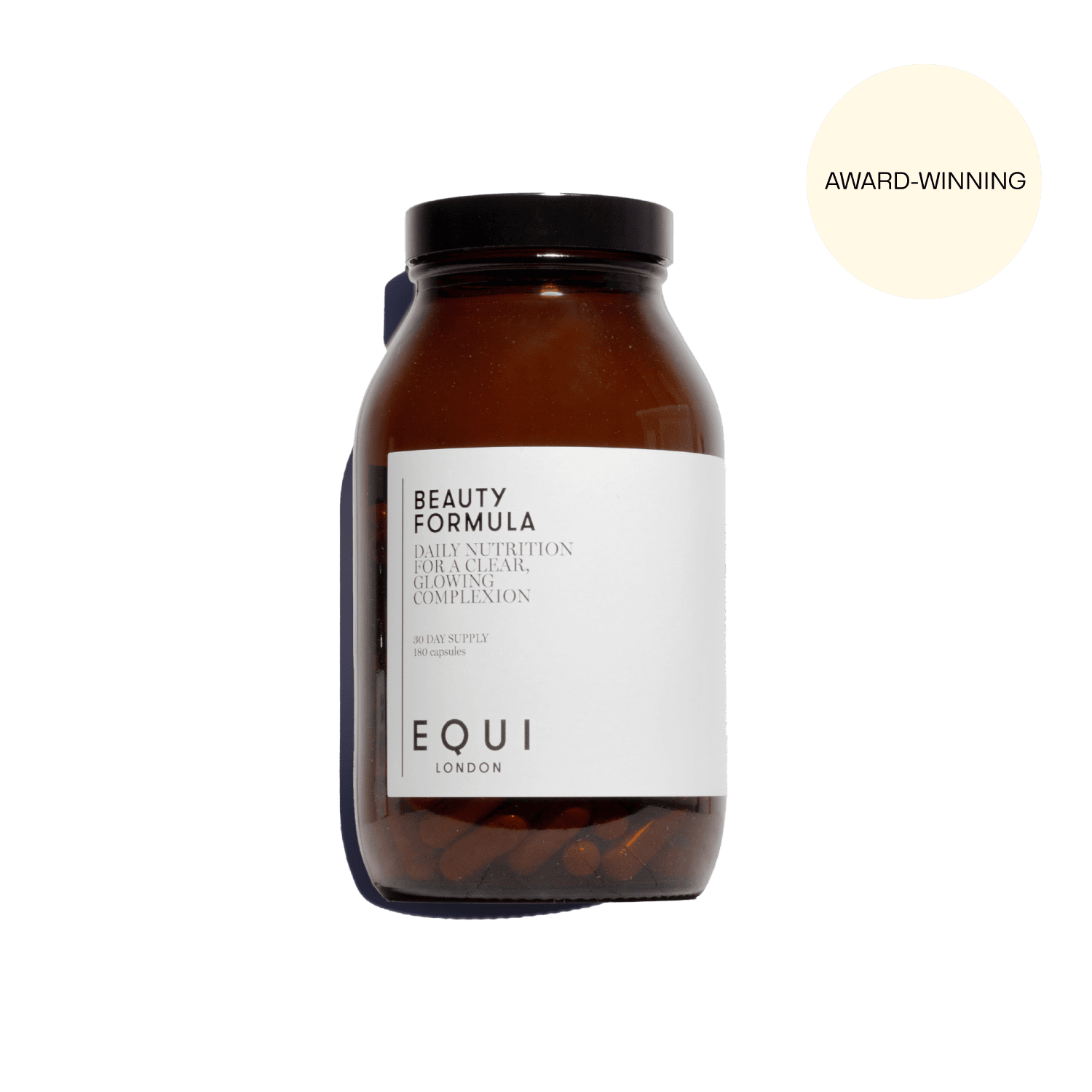
If you are looking for nutritional support for your skin, hormones, and gut health in one daily formula, Beauty Formula contains 48 clinically-dosed nutrients formulated to address the root causes discussed above. Not sure where to start? Take the free quiz to find the right formula for you HERE
REFERENCES:
- Salem I, Ramser A, Isham N, Ghannoum MA. The gut microbiome as a major regulator of the gut-skin axis. Front Microbiol. 2018;9:1459.
- Jung GW, Tse JE, Guiha I, Rao J. Prospective, randomized, open-label trial comparing the safety, efficacy, and tolerability of an acne treatment regimen with and without a probiotic supplement. J Cutan Med Surg. 2013;17(2):114–122.
- Gueniche A, Philippe D, Bastien P, Reuteler G, Blum S, Castiel-Higounenc I, et al. Randomised double-blind placebo-controlled study of the effect of Lactobacillus paracasei NCC 2461 on skin reactivity. Eur J Dermatol. 2010;20(6):731–737.
- Perkins AC, Maglione J, Hillebrand GG, Miyamoto K, Kimball AB. Acne vulgaris in women: prevalence across the life span. J Womens Health. 2012;21(2):223–230.
- Zhou Q, Verne ML, Fields JZ, Lefante JJ, Basra S, Salameh H, et al. Randomised placebo-controlled trial of dietary glutamine supplements for postinfectious irritable bowel syndrome. Gut. 2019;68(6):996–1002.
- Mohammadi H, Ghavami A, Golzan MM, Moradi S. A systematic review and meta-analysis of clinical trials on the effects of glutamine supplementation on gut permeability in adults. Amino Acids. 2024;56(1):54.
- Rapin JR, Wiernsperger N. Possible links between intestinal permeability and food processing: a potential therapeutic niche for glutamine. Clinics (Sao Paulo). 2010;65(6):635–643.
- Zaqout M, Sreeramareddy CT, Ishida N, Yasaka T. Cutaneous effects of androgens and androgen-mediated sebum production and their pathophysiologic and therapeutic importance in acne vulgaris. J Dermatolog Treat. 2024;35(1):2298878.
- Gupta M, Mahajan VK, Mehta KS, Chauhan PS. Zinc therapy in dermatology: a review. Dermatol Res Pract. 2014;2014:709152.
- Yee BE, Richards P, Sui JY, Marsch AF. Serum zinc levels and efficacy of zinc treatment in acne vulgaris: a systematic review and meta-analysis. Dermatol Ther. 2020;33(6):e14252.
- Fujita R, Liu J, Shimizu K, Konishi F, Noda K, Kumamoto S, et al. Anti-androgenic activities of Ganoderma lucidum. J Ethnopharmacol. 2005;102(1):107–112.
- Mishra P, Pal PK, Mishra H. The detoxifying effects of spirulina in promoting liver health and heavy metal elimination: a review. J Pharm Bioallied Sci. 2025;17(Suppl 1).
- Khayef G, Young J, Burns-Whitmore B, Spalding T. Effects of fish oil supplementation on inflammatory acne. Lipids Health Dis. 2012;11:165.
- Dreno B, Amblard P, Agache P, Sirot S, Litoux P. Low doses of zinc gluconate for inflammatory acne. Acta Derm Venereol. 1989;69(6):541–543.
Disclaimer: This article is for educational purposes only and does not constitute medical advice. Food supplements should not be used as a substitute for a varied, balanced diet or healthy lifestyle. Glow Edition is not suitable during pregnancy or breastfeeding. If under medical supervision, consult a healthcare professional before use.


