

Where Science Meets Stronger, Healthier Hair

(10 min read)
Skip to:
- Why We Wanted to Make a Hair Supplement
- How Different Life Phases Impact Our Hair
- Understanding the Hair Growth Cycle: Why Timing Matters
- The Four Phases of Hair Growth
- How Disruption Leads to Hair Thinning
- Why Hair Loss Is Often Delayed (and Feels Confusing)
- The Main Causes Behind Your Hair Issues
- Stress: The Hidden Hair Thief
- Iron & Ferritin: The Postpartum and Menstrual Link
- Diet, GLP-1 Medications & Nutrient Shortfalls
- Hormones: From Testosterone to Perimenopause
- Thyroid Health & Hair Loss
- Scalp Health & Circulation: Where Growth Begins
- Premature Greying: What the Science Says
- Why Topicals Aren’t Enough
- Who Is Hair Edition For?
- How Long Should I Take Hair Edition for Results?
- Ingredient Breakdown – What Each Ingredient Does
- Conclusion: Growing Confidence, Strand by Strand
Hair is more than appearance – much like skin, it can be tied deeply to our confidence and how we feel about ourselves. Great hair can give us such as boost, but as anyone whose been through it will know, when hair starts to shed, thin, lose its shine, or change colour, it can affect us far beyond the mirror — emotionally, socially, and physically.
Hair is also uniquely sensitive to what’s happening inside the body, because from a physiological perspective, hair growth is not essential for survival. When the body is under strain — whether from stress, illness, hormonal shifts, nutrient shortfalls, medication use, or sustained lifestyle pressure — it will always prioritise vital organs and systems first. As a result, hair growth can be one of the first processes to slow, pause, or change.
That doesn’t mean hair is a direct measure of health — or that imperfect hair reflects poor wellbeing. Genetics also play a powerful role, and some people are simply more predisposed to noticing changes in density, texture, or colour than others.
But whether you’re blessed with luscious long locks or not, everyone’s hair follicles are metabolically active and highly responsive to internal signals. This can make hair particularly susceptible to fluctuations in diet, hormones, stress, metabolism, micronutrient status, and certain medications — including GLP-1 therapies – all of which we will go on to explain below.
Why We Wanted To Make A Hair Supplement
It’s not the first time we’ve said this, but supporting hair health requires more than surface-level solutions. Nice shampoos are all well and good, but they can’t realistically address the huge array of different things that our hair needs to thrive — and this is why many women struggle in vain for many years. Nutrition, meanwhile, can be incredibly powerful, and research shows this time and time again1,2.
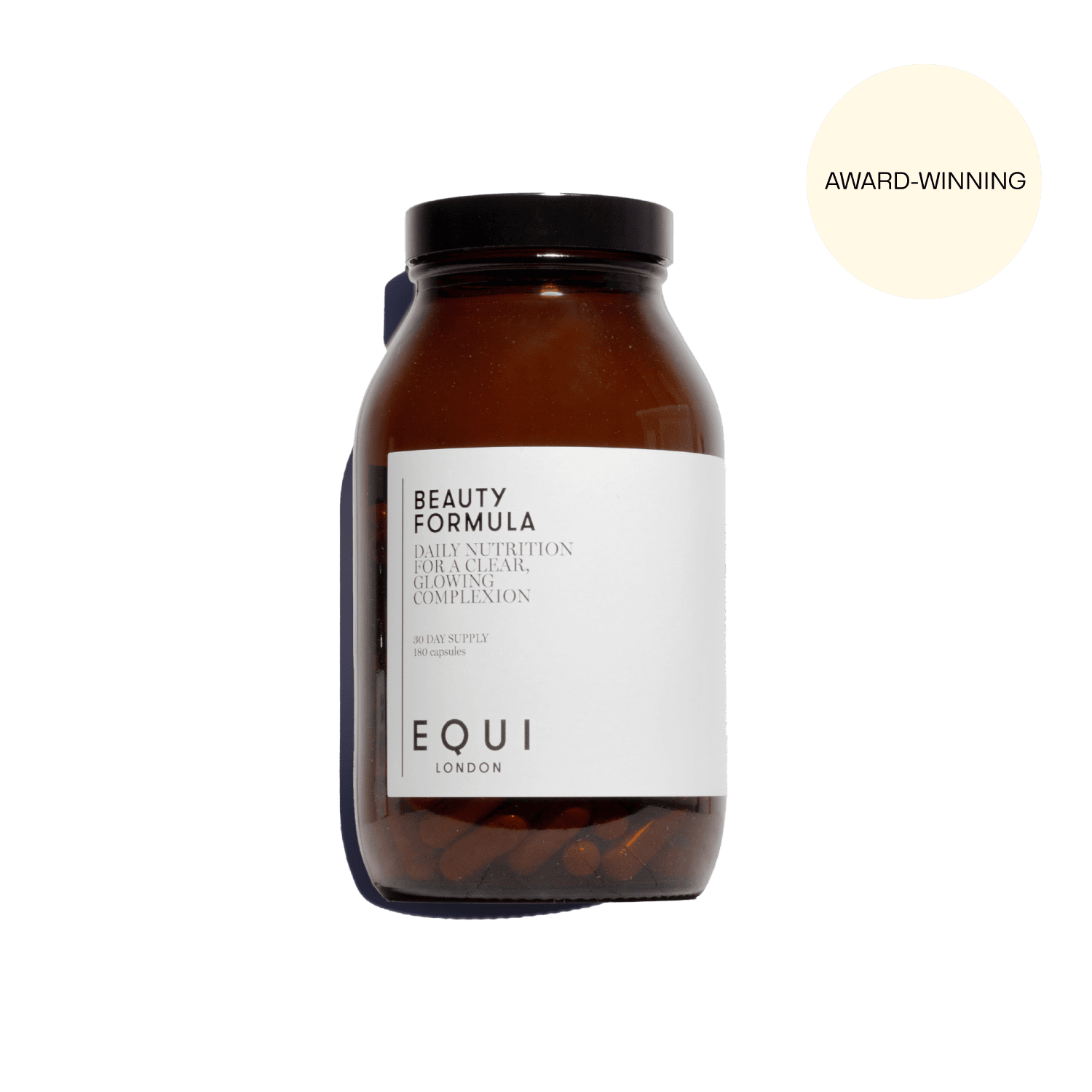
Because of their multi-system, comprehensive approach, our Beauty Formula, Wellness Formula and Collagen & Keratin Edition have always delivered great results for hair in the past. Many customers have told us their hair has transformed when taking these products consistently for 2–3 months. However helpful these products have been over the years, they weren’t specifically formulated or targeted at hair — and we knew we could level up and create something truly special. This is what ultimately spurred us on to formulate Hair Edition.
— Alice Mackintosh, Registered Clinical Nutritionist & Co-Founder
We knew that to create something truly effective, we needed to move beyond narrow, one-dimensional formulas and take a more integrated approach. As with everything we do at Equi, Hair Edition was designed to support internal balance — nutritionally, hormonally and metabolically — because when these systems are supported together, hair is one of the places where those improvements visibly shine through.
How Different Life Phases Impact Our Hair
Hair changes across our lifetime. It responds to what’s happening inside the body — from hormonal shifts and stress to nutrient status, illness, metabolism and ageing. That’s why hair concerns rarely have a single cause, and why quick-fix shampoos or serums so often fall short.
Hair Edition is designed to support hair at every stage of life, whether you're navigating postpartum shedding, noticing perimenopausal thinning, recovering from stress or illness, adapting to dietary changes, or simply seeing more hair in the brush than usual.
Created by nutritionists and backed by science, Hair Edition works at the root — supporting the internal systems that influence hair health, including stress regulation, hormones, nutrient sufficiency, thyroid function, circulation and scalp biology.
It combines a carefully selected blend of targeted vitamins and minerals (including iron, zinc, iodine and vitamin D), amino acids (such as L-lysine, MSM and NAC), and plant extracts (including holy basil and nettle) to support hair structure, growth cycling, pigmentation and resilience — from the inside out.
Understanding the Hair Growth Cycle: Why Timing Matters
Before we explain how these ingredients work, it’s helpful to understand that hair doesn’t grow continuously. Each strand follows a tightly regulated biological cycle — and disruptions at any stage can affect thickness, density and shedding1.
Hair follicles are metabolically active micro-organs. Like other organs, they respond to internal signals including hormones, nutrients, stress mediators, immune activity and energy availability1. When these signals shift, the hair growth cycle shifts with them.
The Four Phases of Hair Growth
Anagen Phase — The Growth Phase
This is when hair actively grows. Cells in the follicle divide rapidly, producing keratin — the structural protein that forms the hair shaft. The anagen phase lasts 2–7 years and determines how long and thick hair can grow. At any given time, 85–90% of scalp hairs are in anagen.1–3
Iron status, thyroid hormones, protein availability, and stress levels all influence how long follicles remain in this phase.
Catagen Phase — The Transition Phase
Catagen is a short phase lasting just a few weeks. Growth stops, the follicle shrinks, and the hair detaches from its blood supply. Only around 1% of follicles are in catagen at any time.2,4
Telogen Phase — The Resting Phase
Telogen lasts around three months. Hair remains anchored but no longer grows. Normally, 10–15% of hairs are in telogen.2 Stress, illness, childbirth, nutritional deficiencies, or hormonal shifts can push more follicles into this phase prematurely.2
Exogen Phase — The Shedding Phase
Exogen is when the hair strand is released and shedding around 100 hairs per day is normal. Typically, a new anagen hair is already forming beneath the old one, but problems can arise when too many follicles shed without enough new growth to replace them.1
How Disruption Leads to Hair Thinning
Stress, nutrient depletion, hormonal imbalance, thyroid dysfunction, inflammation, and calorie restriction can all shorten the anagen phase, push follicles prematurely into telogen, and delay new growth. When enough follicles fall out of sync, shedding becomes noticeable and density declines — even if the scalp itself appears healthy1.
Why Hair Loss Is Often Delayed (and Feels Confusing)
One of the most frustrating aspects of hair loss is timing.
Excessive shedding often appears 2–4 months after the trigger, not immediately. This delay reflects the length of the telogen phase. By the time hair begins to fall, the original cause may feel distant or forgotten — which can make identifying the root cause very challenging.
Common delayed triggers include:
- Recent pregnancy and childbirth
- Illness or infection
- Psychological stress
- Nutrient depletion
- Rapid weight loss or appetite suppression
- Hormonal changes
This delay also explains why hair regrowth requires patience. Supporting follicles back into anagen takes time, and consistency matters — but when addressed properly, the results are absolutely worth the wait.
The Main Causes of Hair Issues
Stress: The Hidden Hair Thief
Chronic psychological stress is one of the most under-recognised drivers of hair loss. If you’ve ever experienced noticeable shedding, you’ll also know that hair coming out in clumps in the shower or brush is deeply distressing — which can create a negative feedback loop that further impacts hair thickness.
The reason stress and hair loss are linked is because when the body perceives ongoing stress, it prioritises survival systems — diverting energy and nutrients away from non-essential functions like hair growth. Over time, this can disrupt the hair growth cycle and push follicles prematurely into telogen, a pattern known as telogen effluvium1.
What makes stress-related hair loss particularly confusing is timing. Shedding often appears weeks or even months after the stressful period has passed. By the time hair begins to fall, cortisol levels may have normalised — but the follicle has already received the signal to stop growing.
A landmark 2021 study published in eLife demonstrated how stress alters mitochondrial function within hair follicles, impacting both growth and pigmentation. Researchers observed individual strands turning grey during periods of high stress — and remarkably, regaining pigment when stress resolved4.
Hair Edition includes holy basil (Ocimum sanctum), an adaptogenic herb traditionally revered in Ayurveda for supporting resilience to stress. In a double-blind, placebo-controlled trial, participants experienced a 39% reduction in stress symptoms after six weeks5.
Iron & Ferritin: The Postpartum and Menstrual Link
Iron deficiency is one of the most common contributors to hair loss in women, particularly after childbirth or during heavy menstrual cycles2, or following prolonged dietary restriction, when iron stores can decline significantly. Hair shedding often follows months later, once depleted iron levels begin to affect follicular oxygen delivery.
Hair follicles are among the most rapidly dividing cells in the body and are especially sensitive to reductions in iron availability. Low ferritin levels — a marker of iron storage — are strongly associated with chronic hair shedding, even when haemoglobin appears normal2. Ferritin in the low or low-normal range is commonly seen in women experiencing shedding, and some clinicians aim for levels around ≥60 ng/mL when supporting regrowth6.
It’s also important to note that in the UK, ferritin levels as low as 15 ng/mL are often classed as ‘normal’, meaning depletion may not always be flagged on routine blood tests.
Hair Edition includes iron bisglycinate — a gentle, highly bioavailable form — paired with L-lysine, an essential amino acid shown to enhance iron absorption and support keratin structure7. Zinc and vitamin D further support immune balance and follicular health, making Hair Edition particularly relevant for postpartum recovery and menstruating women.
Diet, GLP-1 Medications & Nutrient Shortfalls
Hair growth is metabolically expensive. During periods of calorie restriction, illness, appetite loss, or more recently with the rise in GLP-1 medication use (such as semaglutides including Ozempic or Mounjaro), the body may deprioritise hair growth in order to conserve resources.
This can result in:
- Increased shedding
- Gradual thinning
- Hair that feels weaker, duller, or more brittle
Hair Edition helps bridge these nutritional gaps with key nutrients such as iron, zinc and vitamin D, alongside important structural compounds such as MSM (methylsulfonylmethane). MSM provides a bioavailable source of sulphur, which is essential for keratin strength and resilience9. Biotin further supports the maintenance of normal hair, particularly during periods of increased physiological demand.
Our nutritionists also included N-acetyl cysteine (NAC), which supports glutathione production and antioxidant defence, alongside L-lysine, which supports protein synthesis and enhances iron absorption7. Together, these nutrients help support hair structure and growth when dietary intake may be compromised.
Hormones: From Testosterone to Perimenopause
Hormonal balance plays a central role in hair density, growth rate and thickness. Periods of hormonal fluctuation — including pregnancy, postpartum recovery, perimenopause, and conditions such as PCOS — are commonly associated with changes in hair growth patterns3.
One key hormone involved is dihydrotestosterone (DHT). In genetically susceptible individuals, elevated DHT can cause follicle miniaturisation, shorten the growth phase, and lead to progressively finer strands. A visibly receding hairline or thinning at the crown can be signs of this process, which often becomes more pronounced with age.
Hair Edition includes zinc, which supports hormone metabolism and helps regulate the enzyme responsible for converting testosterone into DHT10, supporting this process in a gentle and safe way. Nettle extract works alongside zinc, offering mild anti-androgenic support11, while also contributing to the detoxification pathways involved in hormone clearance.
Thyroid Health & Hair Loss
The thyroid gland regulates metabolic activity throughout the body — including follicular turnover, scalp circulation, and hair texture. Both under- and over-active thyroid states can lead to diffuse thinning, increased shedding, dryness, or premature greying.
Hair Edition supports thyroid health with iodine from kelp, which contributes to normal thyroid hormone production. Iron and zinc act as cofactors in the conversion of inactive T4 into active T3, while vitamin D3 supports immune regulation and healthy hair follicle cycling12.
Scalp Health & Circulation: Where Growth Begins
Hair growth may be regulated internally, but the scalp environment plays a critical supporting role. Adequate blood flow is required to deliver oxygen, nutrients, and hormonal signals to the follicle.
Hair Edition supports scalp health from within using nettle, a powerful botanical known to aid microcirculation and help reduce inflammation. We also include silica from bamboo, which contributes to connective tissue integrity, alongside vitamin D3, which plays a key role in skin barrier function and immune balance12.
Together, these nutrients help create the optimal scalp conditions in which hair follicles can function effectively.
Premature Greying: What the Science Says
Hair colour depends on melanin production during the growth phase. Grey hair occurs when melanocyte activity declines — not because a new pigment appears, but because pigment production stops altogether12,13.
One particularly interesting study showed that hair greying may not be a one-way process. By analysing individual hairs along their length, researchers led by Dr Martin Picard mapped changes in pigmentation over time, revealing a close association between stress exposure and hair greying — and in many cases, re-pigmentation when stress resolved4.
We know that greying is influenced by lifestyle factors, oxidative stress, micronutrient deficiencies (particularly copper and B vitamins), mitochondrial function, and thyroid balance. Hair Edition includes targeted support for these pathways, with copper contributing to normal hair pigmentation and zinc supporting antioxidant defence.
Why Topicals Aren’t Enough
Shampoos and serums can support scalp comfort and improve circulation, but hair fibres are formed deep within the follicle. Without addressing internal drivers such as nutrient status, stress hormones, thyroid function, and hormonal balance, topical solutions can only go so far.
Hair Edition is designed to complement topical care by supporting these internal systems — helping to create the conditions needed for stronger, healthier hair growth over time.
Who Is Hair Edition For?
Hair Edition is designed for anyone noticing changes in hair health — particularly those experiencing:
- Hair that feels lacklustre, dull, or lacking volume
- Postpartum shedding
- Perimenopausal or hormonally driven thinning
- Chronic stress or burnout-related hair loss
- Heavy menstrual cycles or low ferritin
- GLP-1 medication use or appetite loss
- Plant-based or restrictive diets
- Early greying or brittle hair
- Hair that breaks easily or feels weakened
- Over-styled or damaged hair in need of extra support
How Long Should I Take Hair Edition for Results?
Because hair growth is slow and cyclical, most people notice early improvements after 8–12 weeks, with more visible changes over 3–6 months of consistent use.
What this can look like in practice:
- Weeks 4–8: Reduced shedding and improved scalp comfort
- Months 3–4: Improved strength, texture and shine
- Months 4–6: Visible regrowth, with hair that feels thicker, glossier and more resilient
Consistency is key. Supporting the hair growth cycle takes time — but when you address the underlying biology, the results really do speak for themselves.
What Each Ingredient Does
| Ingredient | What It Does | Why It Matters for Hair |
|---|---|---|
| Iron (Bisglycinate) | Supports oxygen delivery and energy metabolism | Low iron stores are strongly linked to hair shedding and a shortened growth phase |
| L-Lysine | Supports protein synthesis and iron absorption | Essential for keratin structure and healthy follicle function |
| Zinc | Supports hormone balance and antioxidant defence | Helps regulate DHT activity and protect follicles from oxidative stress |
| Vitamin D3 | Regulates immune and cell growth pathways | Supports healthy hair follicle cycling and scalp health |
| Iodine (from kelp) | Supports thyroid hormone production | Thyroid hormones play a key role in hair growth, texture and density |
| MSM (Methylsulfonylmethane) | Provides bioavailable sulphur for structural proteins | Supports keratin strength, resilience and reduced breakage |
| N-Acetyl Cysteine (NAC) | Precursor to glutathione production | Helps protect hair follicles from oxidative stress |
| Biotin | Supports the maintenance of normal hair | Contributes to hair strength, particularly during periods of increased demand |
| Copper | Supports pigmentation and connective tissue formation | Contributes to normal hair colour and structural integrity |
| Nettle Extract | Supports circulation and inflammatory balance | Helps nourish follicles and support a healthy scalp environment |
| Holy Basil | Adaptogen supporting stress response | Helps protect the hair growth cycle from stress-related shedding |
| Silica (from bamboo) | Supports collagen and connective tissue integrity | Helps strengthen hair fibres and support scalp structure |
Growing Confidence, Strand by Strand
When you understand the biology, timing and root causes behind hair changes, it becomes clear that hair loss isn’t as mysterious as it can feel — and that breaking the cycle is entirely possible.
Hair Edition has been thoughtfully formulated to support hair at every level, whether you’re navigating postpartum recovery, stress-related shedding, hormonal transitions, dietary changes, or early greying. By addressing the internal systems that influence growth, strength and pigmentation, it helps create the conditions in which healthier hair can grow — consistently and sustainably.
References
- Natarelli N, Gahoonia N, Sivamani RK. Integrative and mechanistic approach to the hair growth cycle and hair loss. J Clin Med. 2023;12(3):893.
- Rushton DH, et al. Nutritional factors and hair loss. Clin Exp Dermatol. 2002;27(5):396–404.
- Bolognia JL, et al. Dermatology. 4th ed. Elsevier; 2017. Chapter 85, Hair Disorders.
- Picard M, et al. Quantitative mapping of human hair greying and reversal in relation to life stress. eLife. 2021;10:e67437.
- Lopresti AL, Smith SJ, Metse AP, Drummond PD. A randomized, double-blind, placebo-controlled trial investigating the effects of Ocimum tenuiflorum (Holy Basil) extract on stress, mood, and sleep. Front Nutr. 2022;9:965130.
- Lin CS, Chan LY, Wang JH, Chang CH. Diagnosis and treatment of female alopecia: focusing on iron deficiency–related alopecia. Tzu Chi Med J. 2023;35(4):322–328.
- Verhaar HJJ, et al. Lysine and iron absorption in women with hair loss. Clin Nutr. 1990;9(2):57–62.
- Almohanna HM, et al. The role of vitamins and minerals in hair loss: a review. Dermatol Ther (Heidelb). 2019;9(1):51–70.
- Evans M, et al. The effect of methylsulfonylmethane on hair, skin and nails: a pilot clinical study. Int J Vitam Nutr Res. 2020;90(3–4):280–285.
- Kil MS, et al. Analysis of serum zinc and copper concentrations in hair loss. Ann Dermatol. 2013;25(4):405–409.
- Chrubasik JE, Roufogalis BD, Wagner H, Chrubasik S. A comprehensive review on the stinging nettle effect and efficacy profiles. Phytomedicine. 2007;14(7–8):568–579.
- Plonka PM, et al. The role of vitamin D in hair disorders and hair follicle cycling. Int J Mol Sci. 2020;21(2):566.
- Kumar AB, Shamim H, Nagaraju U. Premature graying of hair: review with updates. Int J Trichology. 2018;10(5):198–203.
- Paus R, Sevilla A, Grichnik JM. Human hair graying revisited: principles, misconceptions, and key research frontiers. J Invest Dermatol. 2024;144(3):474–491.
Disclaimer: The information provided in this article is for educational purposes only and is not intended to replace medical advice, diagnosis or treatment. Hair Edition and other Equi products are food supplements and should not be used as a substitute for a varied, balanced diet or healthy lifestyle. If you have a diagnosed medical condition, are taking prescription medication, or are under medical supervision, please consult your GP or healthcare professional before use.


